Quick answer
PCOD (polycystic ovarian disease) is a common condition where the ovaries release many immature eggs that can form small cysts, linked to hormones and lifestyle. It's generally milder than PCOS, often well managed with diet and exercise — but only a doctor can diagnose it.
If you've typed "what is PCOD" into a search bar, you're in very good company — it's one of the most common women's-health questions there is, especially across India where the term PCOD is used everywhere. And yet the answers online are a confusing mess: some say PCOD and PCOS are the same thing, some say they're completely different, and almost nobody admits that even doctors don't use the words consistently. This guide cuts through that.
Here's what we'll do, plainly and without fearmongering: explain what PCOD (polycystic ovarian disease) actually is, walk through the real difference between PCOD and PCOS — the heart of this article — and then cover the symptoms, causes, diagnosis, fertility and, crucially, how diet and lifestyle change so much for the better. PCOD is common, usually manageable, and rarely the catastrophe the internet implies. But it is also a medical condition, so throughout this guide the message is the same: this is education, not diagnosis, and your own doctor is the one who can tell you what's going on with your body.
We're the team behind Vyve, a private, on-device AI period tracker — so consider the source — but our goal here is to inform first. Whether you ever use our app or not, understanding PCOD is one of the most empowering things you can do if your cycle has felt unpredictable.
On this page
What is PCOD, in plain English?
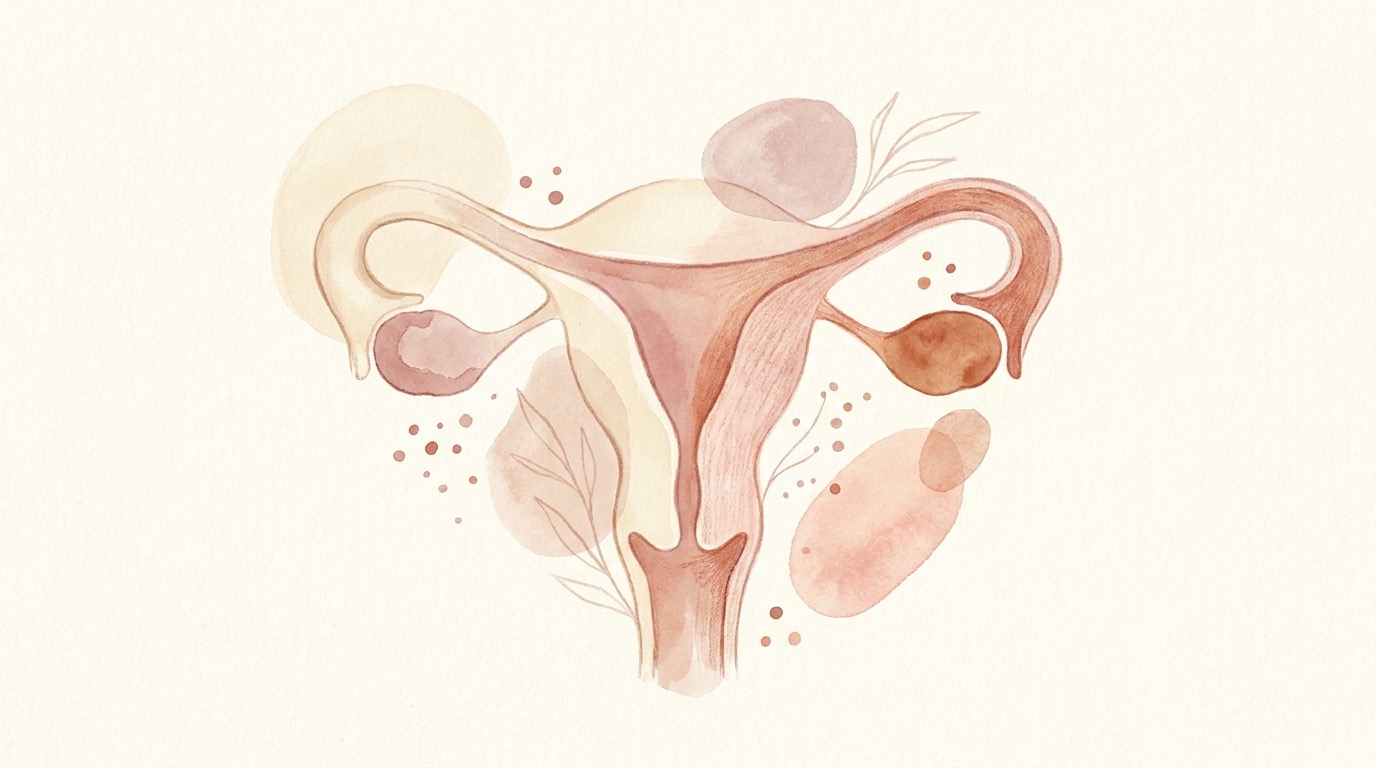
Let's start with the quotable version: PCOD stands for polycystic ovarian disease. It's a common condition in which the ovaries release many immature or partially mature eggs, which can build up into small fluid-filled sacs often called cysts. It's closely tied to your hormones and your lifestyle, and for many people it's mild and very manageable.
To understand it, it helps to remember what ovaries normally do. In a typical menstrual cycle, the ovaries mature a small batch of follicles each month, and usually one of them ripens fully and releases a single mature egg at ovulation. In PCOD, that orderly process gets disrupted. Instead of one egg maturing and releasing cleanly, the ovaries release a number of immature or partially mature eggs. Over time, some of these can accumulate as small cysts on the ovaries — which is where the "polycystic" (many cysts) name comes from. Those "cysts" aren't tumours and they aren't the dangerous kind people fear; they're essentially follicles that didn't complete their job.
This disruption is driven by hormones that have drifted out of their usual balance — and that balance is strongly influenced by things like body weight, diet, physical activity, stress and sleep. That's the key, hopeful idea behind PCOD: because lifestyle factors play such a large role, lifestyle changes can make a genuine, measurable difference. PCOD is less a fixed disease you simply "have" and more a state your body can often be nudged back toward balance.
One honest caveat right away: the word "disease" in polycystic ovarian disease makes it sound more alarming than it usually is. For most people, PCOD shows up mainly as irregular periods and some related symptoms, and it's compatible with a full, healthy life — including pregnancy. The goal isn't to panic; it's to understand and manage.
Key takeaway
PCOD means the ovaries release many immature eggs that can form small cysts, driven by hormonal imbalance that lifestyle strongly influences. For most people it's mild and manageable — and very much compatible with a healthy life.
PCOD vs PCOS: the real difference (and the honest caveat)
This is the question almost everyone actually came for: what is the difference between PCOD and PCOS? So let's give you the clearest answer that's still honest.
In the way the terms are most commonly used — especially in everyday conversation and across much of India — PCOD is treated as the more common and generally milder condition, while PCOS is treated as the more significant disorder. Here's what that distinction usually means in practice:
- PCOD (polycystic ovarian disease) is framed as primarily an ovarian issue: the ovaries release many immature eggs, periods become irregular, and lifestyle changes often improve things substantially. It's described as more common and, for most people, milder. The ovaries may look polycystic, but the wider hormonal and metabolic disruption tends to be limited.
- PCOS (polycystic ovary syndrome) is framed as a more serious endocrine and metabolic disorder — a whole-body hormonal condition, not just an ovarian one. It more often involves insulin resistance, higher levels of androgens (so symptoms like acne and excess hair growth can be more pronounced), greater impact on fertility, and links to longer-term metabolic health risks like type 2 diabetes. Because it's a syndrome, it's defined by a cluster of features rather than a single finding.
So the simple mental model many people use is: PCOD is more common and milder, often manageable with lifestyle; PCOS is the more involved endocrine and metabolic disorder. That's a useful starting frame, and it captures the general direction of how the terms are applied.
Now the caveat you genuinely deserve, because most articles bury it: the terminology is used inconsistently, and the line between PCOD and PCOS is blurry. Internationally, "PCOD" is not a precise medical diagnosis the way "PCOS" is — many clinicians and medical bodies use PCOS as the formal diagnostic term and either don't use "PCOD" at all or use it loosely as a gentler, more everyday word for the same broad picture. Some doctors use the two terms more or less interchangeably. Others use "PCOD" specifically to mean a milder presentation. There is no single, universally agreed dividing line that says "this is PCOD and that is PCOS."
PCOD and PCOS aren't two neatly separated boxes — they're points on a spectrum of ovarian and hormonal health, described by terms that even clinicians use differently. The label matters far less than getting properly assessed.
Why does this matter to you? Because it means you shouldn't get too attached to which label you've been given, and you definitely shouldn't try to decide for yourself which one you "have." What matters is the actual picture in your body — your cycles, your symptoms, your bloodwork, your scans — and what your clinician recommends based on all of it. Two people with the same diagnosis can need very different things. If you want the full, detailed breakdown specifically of the more involved condition, we've written a dedicated companion piece: our full PCOS guide goes deep on diagnosis criteria, insulin resistance and long-term care.
PCOD vs PCOS, side by side
Here's the comparison in one view. Treat this as the common usage distinction — a helpful map, not a rigid medical rulebook — and remember that only a clinician can tell you which picture fits you.
| Feature | PCOD | PCOS |
|---|---|---|
| How common | Generally considered more common | Common, but less so than PCOD |
| Severity | Usually milder | Typically more significant |
| Main issue | Ovaries release many immature eggs; an ovarian-focused condition | A broader endocrine & metabolic disorder, often with insulin resistance and higher androgens |
| Fertility impact | Often limited; pregnancy usually very possible | Can be more affected, though many still conceive with support |
| Management | Lifestyle changes often make a big difference | Lifestyle plus closer medical management of hormones and metabolic health |
Read the table top to bottom and the pattern is clear: PCOD leans milder and more lifestyle-responsive, PCOS leans broader and more medically involved. But notice how much of the language is "often," "usually" and "generally" — that hedging is honest, not lazy. These conditions exist on a spectrum, and your individual reality is what counts.
PCOD symptoms worth knowing
PCOD symptoms vary a lot from person to person — some people have several, some barely notice anything beyond an irregular cycle. The most commonly reported PCOD symptoms include:
- Irregular, delayed or missed periods. This is the classic and most common sign. Because ovulation becomes irregular, cycles can be longer, unpredictable, or occasionally skip altogether. (If your periods have also become unusually short or sparse, our guide to irregular and short periods unpacks what that can mean.)
- Weight gain or difficulty losing weight. Many people with PCOD find weight creeps up or is stubborn to shift, often around the midsection — and weight and hormonal balance influence each other in both directions.
- Acne and oily skin. Hormonal shifts can drive breakouts, often along the jaw and chin, sometimes beyond the teenage years.
- Extra hair growth (hirsutism). Coarser or darker hair on the face, chin, chest or stomach, driven by androgens.
- Scalp hair thinning. Some people notice hair becoming thinner or shedding more at the crown.
- Trouble conceiving. Because ovulation is irregular, it can take longer to get pregnant — though, as we'll cover, pregnancy is usually very possible.
- Mood changes and fatigue. Hormonal fluctuation and irregular cycles can affect mood, energy and sleep for some people.
Two important things about this list. First, these symptoms overlap heavily with other conditions — thyroid issues, stress, and ordinary cycle variation can all look similar — which is exactly why symptoms point toward a clinic visit rather than a confirmed self-diagnosis. Second, you do not need to have all of these to have PCOD, and having one or two of them absolutely does not mean you definitely have it. Symptoms are clues, not verdicts.
Symptoms in one line
Irregular periods are the hallmark, often alongside weight changes, acne, extra hair growth or thinning scalp hair. They're clues to bring to a doctor — not a diagnosis you can give yourself.
What causes PCOD?
There's no single cause of PCOD; it's best understood as the result of several factors interacting. In simple terms, the main contributors are:
- Lifestyle factors. Body weight, diet quality, physical activity, stress and sleep all influence the hormonal balance that governs ovulation. Patterns like high intake of refined carbohydrates and ultra-processed foods, low activity, chronic stress and poor sleep can tip the balance — which is also why changing these can help so much.
- Insulin resistance. This is a big one. When the body's cells respond less efficiently to insulin, the body produces more of it to compensate. Higher insulin can nudge the ovaries toward producing more androgens and can disrupt normal ovulation. Insulin resistance is a central feature in PCOS and also plays a role in many cases of PCOD — and it's closely tied to diet, activity and weight, which is part of why lifestyle changes are so effective.
- Genetics. PCOD and PCOS tend to run in families. If your mother or sister has irregular cycles or a similar diagnosis, your own likelihood is somewhat higher. Genes don't decide your fate, but they do set part of the starting point.
Notice the through-line: most of these levers — lifestyle, insulin sensitivity, and even how strongly genetics express themselves — are influenced by the daily choices around food, movement, stress and sleep. That's not a guilt trip (PCOD is never your "fault"), but it is genuinely good news, because it means you have real influence over how the condition behaves.
Make sense of an unpredictable cycle
Vyve tracks irregular cycles and PCOD-style symptoms honestly, finds the patterns, and helps you walk into your doctor's office with real data instead of guesses — all privately, on your phone.
Try Vyve todayHow is PCOD diagnosed?
You cannot diagnose PCOD from a blog, an app, or a symptom checklist — and that's not a disclaimer for its own sake, it's the truth of how these conditions work. A proper assessment by a clinician (usually a gynecologist or your primary doctor) typically draws on a few things together:
- Your history. A conversation about your menstrual cycle pattern, symptoms, weight changes, family history and how long things have been going on. This is often the most informative part.
- A physical examination. Looking for signs like acne, excess hair growth or other clues, depending on what you describe.
- Blood tests. These can check hormone levels (including androgens), blood sugar and insulin-related markers, and rule out other conditions like thyroid problems that can mimic the same symptoms.
- An ultrasound. A pelvic or transvaginal ultrasound can show whether the ovaries have the characteristic polycystic appearance — many small follicles. Importantly, polycystic-looking ovaries on a scan alone don't automatically mean PCOD or PCOS; plenty of people have that appearance without the condition, which is why the scan is interpreted alongside everything else.
The reason this matters: because the symptoms overlap so heavily with other conditions, a real diagnosis is about ruling things in and out, not matching a checklist. Detailed records of your own cycles and symptoms make this process faster and more accurate — which is one of the most practical ways tracking helps, and we'll come back to it.
PCOD and pregnancy: the reassuring part
One of the most common fears around PCOD is "does this mean I can't have children?" — and for most people, the honest, reassuring answer is no, it doesn't. Pregnancy is usually very possible with PCOD.
Because PCOD mainly affects how regularly you ovulate rather than whether you can ovulate at all, many people with PCOD conceive naturally. It may simply take a bit more patience and a bit more attention to timing, because irregular cycles make the fertile window harder to pin down. For those who do face more difficulty, there are well-established medical options — from lifestyle-led approaches that restore more regular ovulation, to medications that support ovulation, to fertility treatments — and a doctor can guide what's appropriate. Notably, the same lifestyle changes that help PCOD symptoms (balanced diet, regular movement, weight management) often improve ovulation regularity too, which is why they're usually the first thing recommended for fertility as well.
The practical takeaway: a PCOD label is not a closed door on having children. If you're trying to conceive, understanding your cycle and your fertile window becomes genuinely valuable — and if it's taking longer than you'd expect, that's a conversation to have with a clinician sooner rather than later, not something to quietly worry about alone.
On fertility
PCOD affects how regularly you ovulate, not whether you can. Pregnancy is usually very possible — many conceive naturally, others with support — and the lifestyle changes that ease symptoms often improve ovulation too.
Managing PCOD: lifestyle does the heavy lifting
Here's the genuinely hopeful core of PCOD: for most people, lifestyle changes are the single most powerful tool, and they're often recommended as the first line before anything else. This is what makes PCOD feel so much more manageable than its scary name suggests. Let's walk through the levers — with the firm caveat that none of this replaces personalized advice from your own doctor.
Diet. There's no single official "PCOD diet," and you should be wary of anyone selling one as a miracle cure. But the evidence consistently points toward a balanced, whole-food pattern: plenty of vegetables and fiber, lean protein, healthy fats, and fewer refined carbohydrates, sugary drinks and ultra-processed foods. The aim is to keep blood sugar and insulin steadier, which directly addresses one of the key drivers. Eating regular meals rather than skipping and crashing, being gently mindful of portions, and favoring consistency over extreme restriction tends to work far better — and is far more sustainable — than any crash diet. For specifics tailored to you, a registered dietitian is worth their weight in gold.
Exercise. Regular physical activity improves insulin sensitivity, supports a healthy weight, lifts mood and helps regulate cycles. A mix of movement you'll actually stick with — brisk walking, strength training, cycling, dance, whatever fits your life — beats an intense plan you abandon in two weeks. Consistency is the real ingredient.
Weight management. For those carrying extra weight, even a modest, gradual reduction can meaningfully improve symptoms and help restore more regular ovulation, because weight and hormonal balance are so intertwined. The emphasis is on modest and gradual: this is about steady, sustainable change, not punishing crash plans, and it's not relevant or healthy for everyone — your doctor can advise what's right for you.
Stress and sleep. These get overlooked, but they matter. Chronic stress and poor sleep affect the hormones that regulate your cycle, so protecting your sleep and finding stress-management that works for you — movement, time outdoors, mindfulness, proper rest — is real PCOD management, not a soft add-on.
Medical options exist — see a doctor. Lifestyle is powerful, but it isn't the whole toolkit, and it isn't always enough on its own. Depending on your situation and goals, a clinician may recommend medical options to help regulate cycles, manage specific symptoms, address insulin resistance, or support fertility. We're deliberately not naming medications or doses here, because the right choice is entirely individual and is a decision for you and your doctor — not a blog. The point is simply that effective medical help is available when lifestyle changes aren't enough, and seeking it is a smart, normal step.
So, is PCOD curable? The most honest framing is that PCOD is usually manageable rather than permanently "cured." But that word "managed" undersells how good the outlook can be: with the right lifestyle changes and, where needed, medical support, many people see their symptoms improve dramatically and their cycles become far more regular. The goal isn't a magic one-time fix; it's bringing your body back toward balance and keeping it there.
When to see a doctor
This is the part to take seriously, because PCOD sits squarely in the territory where self-guessing does more harm than good. Please book a conversation with a qualified clinician if you notice any of the following:
- Periods that are persistently irregular, very delayed, or missing for months when you're not pregnant.
- Several of the symptoms above appearing together — irregular cycles plus, say, acne, excess hair growth or unexplained weight gain.
- Difficulty conceiving after trying for a while (generally around a year, or sooner if your cycles are very irregular or you're over 35).
- Symptoms that are affecting your confidence, mood or quality of life — these deserve care, not endurance.
- Any new, severe or rapidly changing symptoms, which always warrant prompt medical attention.
And the bigger point, woven through this whole guide: nothing here is a diagnosis. PCOD, PCOS and the conditions that mimic them can only be properly identified by a clinician using your history, examination and tests together. If something about your cycle or your body feels off, that feeling is worth acting on — early assessment leads to better, simpler outcomes, and most of what's discovered turns out to be very manageable.
The bottom line on care
Irregular or missing periods, clustered symptoms, or trouble conceiving all deserve a clinician — not a self-diagnosis. PCOD is highly manageable, and early, evidence-based care makes it more so.
How tracking helps you understand PCOD — privately
Understanding PCOD is the knowledge. Seeing how it actually behaves in your body, week to week, is where tracking earns its place — and it's exactly what we built Vyve to help with, on a foundation most apps won't touch: complete privacy.
The hardest thing about PCOD is unpredictability. When cycles are irregular, most period apps quietly fall apart — they assume a tidy 28-day rhythm and then confidently predict dates that turn out to be wrong. Vyve is built to handle irregular cycles honestly: instead of pretending a single date is certain, it shows realistic windows with a confidence level, and it tells you plainly when your cycle is too irregular to predict precisely. That honesty matters far more than false reassurance when your body isn't running like a metronome.
Beyond predictions, Vyve helps you track the symptoms that cluster with PCOD — cycle length and irregularity, skin changes, mood, energy, weight trends — and surface the patterns over time. Those patterns turn vague worry ("my periods have been weird lately") into something concrete you can act on. And because it ties everything together, Vyve can export a clean, doctor-ready report of your cycle history and symptoms, so when you do see a clinician, you arrive with months of real data instead of trying to remember dates. That single thing can make an assessment faster and more accurate.
One thing we want to be completely clear about: Vyve is not a diagnostic tool. It cannot tell you whether you have PCOD or PCOS, and it never tries to. What it does is help you observe your own body accurately and bring better information to the people who can diagnose — your clinicians. That's the right and responsible role for an app to play.
And it does all of this privacy-first. The AI runs on your device, your cycle data is encrypted and stays on your phone, there's no required account, no ads, and nothing about your body is sold or shared. There's simply no central database of your cycle for anyone to breach or monetize. Health data this personal shouldn't be the price of understanding your own body.
Frequently asked questions
What is PCOD?
PCOD stands for polycystic ovarian disease. It describes a common condition in which the ovaries release many immature or partially mature eggs that can build up into small fluid-filled sacs (often called cysts). It's closely tied to hormonal balance and lifestyle, and for many people it's milder and more manageable than PCOS, often responding well to diet, exercise and weight management. It's not a self-diagnosis — only a clinician can confirm what's going on.
What is the difference between PCOD and PCOS?
In common usage, PCOD (polycystic ovarian disease) is considered the more common and generally milder condition, where the ovaries release many immature eggs and lifestyle changes often make a big difference. PCOS (polycystic ovary syndrome) is treated as a more significant endocrine and metabolic disorder, frequently involving insulin resistance, higher androgens and a wider impact on long-term health. Importantly, the terms are used inconsistently — many clinicians worldwide consider PCOS the formal diagnosis and use PCOD loosely or interchangeably. Only a doctor can tell you which applies to you.
What are the symptoms of PCOD?
Common PCOD symptoms include irregular, delayed or missed periods, weight gain or difficulty losing weight, acne and oily skin, extra hair growth on the face or body, hair thinning on the scalp, and sometimes trouble conceiving. Symptoms vary widely from person to person and many of them overlap with other conditions, so they point toward a conversation with a clinician rather than a confirmed diagnosis.
Is PCOD curable, and can you get pregnant with it?
PCOD is usually described as manageable rather than permanently curable, but the good news is that lifestyle changes — balanced diet, regular movement, weight management, better sleep and lower stress — can dramatically improve symptoms and often restore more regular cycles. Pregnancy is usually very possible with PCOD; many people conceive naturally, and others do so with medical support. A doctor can guide treatment and fertility options for your situation.
What is the best diet for PCOD?
There's no single official PCOD diet, but most evidence points to a balanced, whole-food pattern: plenty of vegetables, fiber, lean protein and healthy fats, with fewer refined carbs, sugary drinks and ultra-processed foods to help steady blood sugar and insulin. Regular meals, gentle portion awareness and consistency matter more than any extreme or restrictive plan. Because individual needs differ, it's best to personalize this with a doctor or registered dietitian.
Understand your cycle, keep it private.
Join the Vyve early-access list for honest tracking of irregular cycles, PCOD-style symptom patterns, and doctor-ready reports — with AI that lives on your phone, not on an ad server.
Try Vyve today