Quick answer
Pregnancy stretch marks happen when the skin's middle layer tears during rapid stretching, influenced heavily by genetics. Most creams and oils have weak or mixed evidence for prevention. They start red or purple, then fade over months to years to silvery/white. Real fading treatments (after pregnancy) include topical retinoids, laser therapies, microneedling — best discussed with a dermatologist.
If you're pregnant and Googling "how to prevent stretch marks," you're about to be sold a lot of things. Expensive oils, lotions, creams, "belly butters," each promising to keep your skin smooth and unmarked. Some are lovely to use. Almost none have strong evidence they actually prevent stretch marks. Genetics does most of the heavy lifting, and it's worth knowing the truth going in.
This guide covers what causes pregnancy stretch marks, why genetics matters more than any cream, whether prevention is realistic, how stretch marks change over time, and what treatments actually have research behind them for fading them after birth.
Quick note upfront: this is educational, not medical advice. For personal skincare during pregnancy or stretch mark treatment afterward, your doctor or dermatologist is the right resource. We build Vyve, a private, on-device AI cycle and pregnancy tracker — so consider the source.
On this page
What are pregnancy stretch marks?
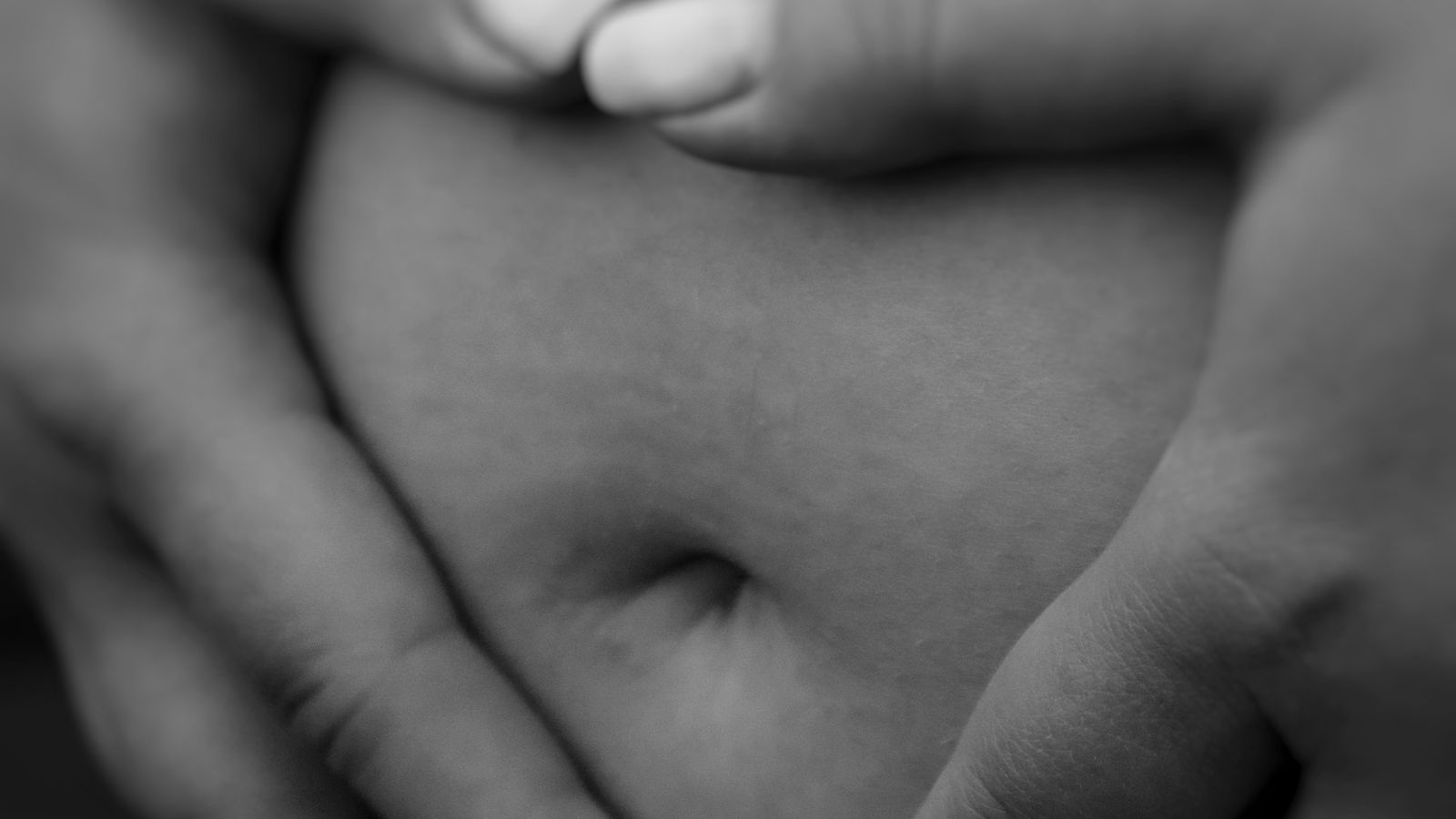
Pregnancy stretch marks — medically known as striae gravidarum — are visible lines or streaks that appear on the skin during pregnancy. They start as pink, red, purple, or brownish lines depending on your skin tone, and gradually fade over months to years into silvery or white marks.
They're a type of scar. Specifically, they're tears in the middle layer of the skin (the dermis) that show through the thin top layer (the epidermis). The skin itself is intact — you don't feel them, they don't bleed — but the underlying structure has changed.
Why they happen
Two main forces are at work:
- Mechanical stretching. As the belly, breasts and hips grow during pregnancy, the skin has to stretch to accommodate the change. When stretching happens faster than the skin can adapt, the dermis tears.
- Hormonal effects on skin. Pregnancy hormones — particularly high levels of corticosteroids and shifts in estrogen — reduce the skin's elastic fibers, making it less able to stretch without tearing.
Add in the individual variability of skin (thickness, elasticity, moisture) and genetics, and you have a wide range of possible outcomes from "no visible stretch marks at all" to "significant striae across multiple areas."
Where they appear
Most common locations during pregnancy:
- Belly — especially the lower abdomen, where the most stretching happens.
- Breasts — often around the sides.
- Hips and thighs — from overall body changes.
- Buttocks.
- Upper arms and lower back — less common but possible.
When they appear
Pregnancy stretch marks most often appear in the second half of pregnancy — usually in the third trimester when growth is most rapid — though some people notice them earlier. Some develop them primarily in the last few weeks of pregnancy or even during labor.
The genetics reality check
Here's the truth the marketing doesn't want you to hear: genetics is by far the biggest predictor of whether you'll get pregnancy stretch marks and how severe they'll be. Research consistently shows that a family history of stretch marks — particularly on your mother's side — is one of the strongest predictors. If your mother had significant stretch marks with her pregnancies, your odds are higher.
Other risk factors include:
- Younger age (skin under 25 or so is often more prone).
- Higher baby weight or twin/multiple pregnancy.
- Rapid weight gain during pregnancy.
- Personal history of stretch marks from previous rapid growth (adolescence, prior weight change).
- Skin type — some skin types show them more visibly.
This isn't to say "give up." It's to say: if you get stretch marks despite doing everything the creams told you to, it's not because you failed. It's genetics.
Can you actually prevent them?
Systematic reviews of prevention strategies — including creams containing cocoa butter, vitamin E, various plant oils, and specialty formulations — have generally found weak or mixed evidence for reducing stretch mark severity. Some studies suggest that formulations containing certain active ingredients (like Centella asiatica extract or hyaluronic acid) may modestly help, but the effect is small and not consistent.
What does have some plausible support:
- Massage. The act of massaging the skin may be more helpful than the specific cream you're using — increased blood flow, and possibly some effect on collagen production.
- Adequate hydration and nutrition. Well-hydrated, well-nourished skin generally handles stretching better than dry, depleted skin.
- Steady rather than rapid weight gain. When possible — not always in your control.
- Moisturizing. Keeps skin comfortable, may help with itch as the belly stretches, but the anti-stretch-mark evidence is weak.
What doesn't help: any single product promising to "prevent" stretch marks. If it could, we'd all use it, and dermatologists would prescribe it.
Key takeaway
Most creams don't have strong evidence for preventing stretch marks. Massage, moisturizing, hydration, and steady weight gain may help modestly. Genetics is the biggest factor — and it's not something you did wrong.
Do they fade over time?
Yes — the color fades significantly. Here's the typical timeline:
- Fresh stretch marks: Pink, red, or purple. Sometimes slightly raised or itchy.
- First few months postpartum: Color starts to lighten.
- 6–12 months: Most stretch marks are noticeably lighter, transitioning toward silvery or white.
- Long-term: Mature stretch marks are usually pale silvery, and much less visible than fresh ones. The texture change (slight indent in the skin) usually remains, but it becomes far less noticeable.
Complete disappearance is unusual, but significant fading is very common. Many people find that after a year or two, their stretch marks are barely noticeable.
| Stretch mark stage | Appearance | Treatment responsiveness |
|---|---|---|
| Fresh (0–6 months) | Pink, red, purple, sometimes slightly raised | Most responsive to treatment |
| Fading (6–18 months) | Lighter, transitioning color | Still fairly responsive |
| Mature (over 18 months) | Silvery or white, slight indent | Harder to treat but still possible |
Treatments that actually help (after pregnancy)
If you want to actively work on fading your stretch marks after pregnancy and breastfeeding, options with reasonable research support include:
- Topical retinoids (tretinoin) — evidence for improving fresh stretch marks in particular. Not used during pregnancy or breastfeeding. Prescription-only.
- Laser and light treatments — pulsed dye laser for red/fresh stretch marks, fractional lasers for mature ones. Done by dermatologists.
- Microneedling — creates controlled micro-injuries that stimulate collagen. Some evidence for texture and appearance improvement.
- Radiofrequency treatments — may improve appearance.
- Chemical peels — some evidence for lightening mature stretch marks.
- Combination treatments — often more effective than any single treatment.
Realistic expectations: these treatments can significantly reduce visibility but rarely eliminate stretch marks entirely. A consultation with a dermatologist gives you an honest sense of what's achievable for your specific situation.
The self-acceptance angle
This deserves saying: your body did something extraordinary, and stretch marks are one of the visible traces of that. The pressure to "bounce back" from pregnancy is intense and often unrealistic. Many people find that their relationship with their stretch marks shifts over time — from something to hide to something they've made peace with.
You do not owe anyone a stretch-mark-free body. Treatments exist if you want them; leaving them alone is equally valid. Neither choice makes you a better or worse parent, partner, or person.
Track your pregnancy without body policing
Vyve tracks your cycle and pregnancy honestly — no shame, no unrealistic ideals. Its AI runs on your phone, keeps your data private, and treats your body as it is.
Try Vyve todayWhen to see a doctor
See a clinician or dermatologist if:
- Stretch marks are accompanied by severe itching (see the note on cholestasis in our pregnancy glow guide).
- Skin changes are painful, ulcerating, or infected.
- You want to discuss treatment options after pregnancy.
- Very sudden or unusual skin changes appear.
The flag, simply
Stretch marks themselves don't need medical attention. Severe itching, painful skin changes, or signs of infection do.
Frequently asked questions
What causes pregnancy stretch marks?
They happen when the middle layer of skin tears as the skin stretches rapidly, combined with hormonal effects on skin elasticity. Genetics play a huge role.
Can you prevent pregnancy stretch marks?
Mostly no. Genetics is the biggest factor, and most creams and oils have weak or mixed evidence for reducing severity. Massage, hydration, nutrition, and steady weight gain may help modestly.
Where do pregnancy stretch marks appear?
Most commonly on the belly, breasts, hips, thighs, and buttocks — sometimes also upper arms and lower back.
Do pregnancy stretch marks fade?
Yes — the color fades significantly over months to years, from pink/red/purple to silvery or white. The texture change usually remains but becomes far less noticeable.
What treatments actually work for stretch marks?
Prescription topical retinoids (after pregnancy/breastfeeding), laser treatments, microneedling, and radiofrequency therapies have some evidence for improvement. Over-the-counter creams have weak evidence. A dermatologist can discuss options.
Track your pregnancy body, without shame.
Join the Vyve early-access list for AI that tracks your cycle and pregnancy — all on your phone, never on an ad server.
Try Vyve todayDisclaimer: This article is educational, not medical advice. For personal skincare during pregnancy or stretch mark treatment afterward, please consult your doctor or dermatologist.