Quick answer
Linea nigra is the dark vertical line that appears on many pregnant bellies, usually in the second trimester. It's caused by pregnancy hormones increasing pigment production along the linea alba (a normally invisible band of connective tissue). It's completely normal, harmless, doesn't need treatment, and typically fades over the months after delivery. Not everyone gets one — that's also normal.
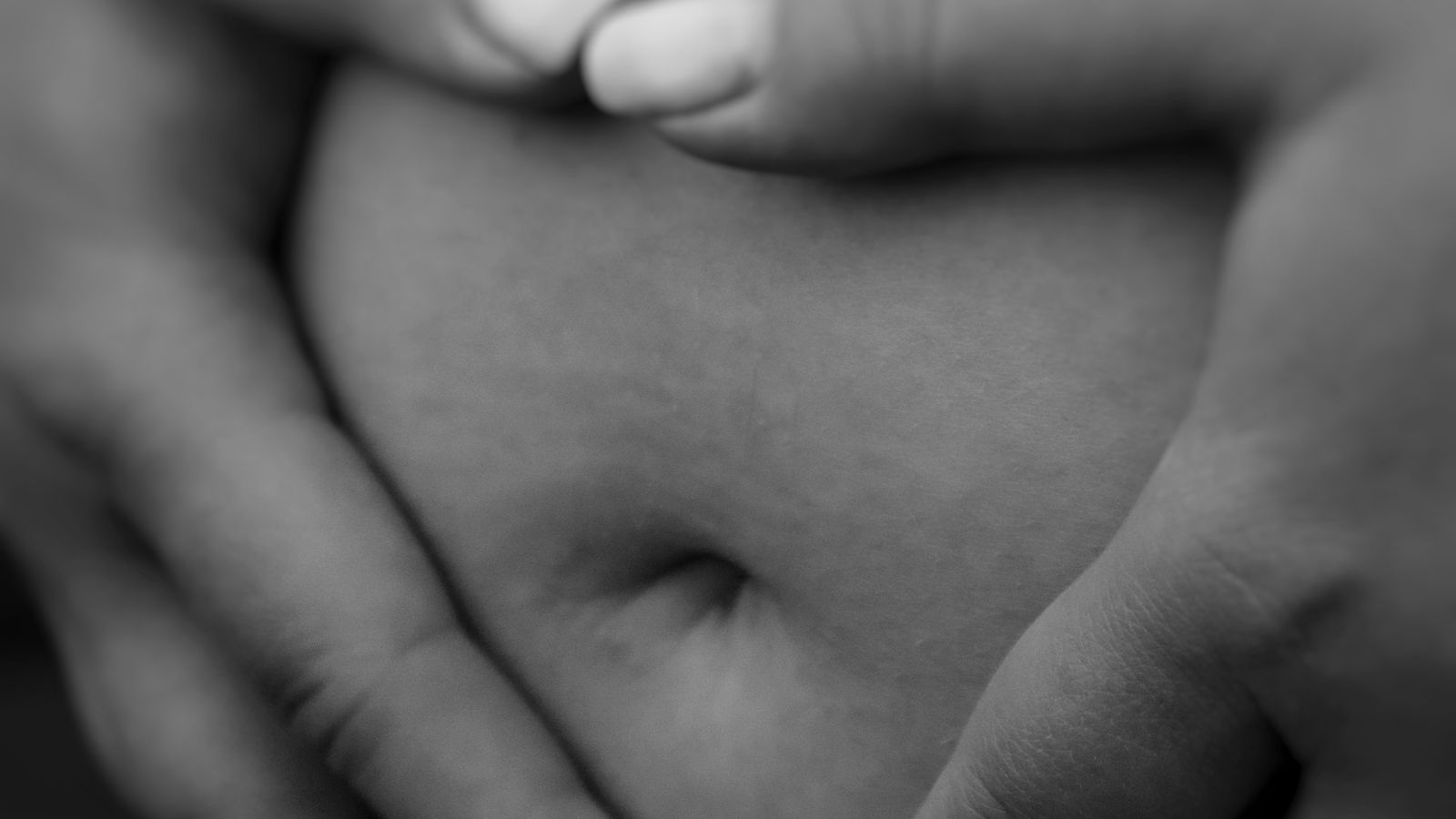
Pregnancy comes with a long list of skin changes nobody quite warns you about, and linea nigra — Latin for "black line" — is one of the most commonly noticed. It's the dark vertical stripe that runs from around your pubic bone up toward (and sometimes through) your belly button, and it can appear seemingly overnight in the middle of pregnancy.
This guide covers what linea nigra actually is, why it appears, when to expect it, why some people get it and others don't, whether it fades, other pregnancy pigmentation changes to expect, and when a skin change during pregnancy is worth mentioning to your doctor.
Quick note upfront: this is educational, not medical advice. For personal skin concerns during pregnancy, your doctor or dermatologist is the right resource. We build Vyve, a private, on-device AI cycle and pregnancy tracker — so consider the source.
On this page
What is linea nigra?
Linea nigra (pronounced LIN-ee-uh NY-gruh) means "black line" in Latin. It's a dark, usually brownish vertical line that appears on the abdomen during pregnancy, running from the pubic area upward, often through or around the navel. In some people it extends all the way up toward the ribcage; in others it only extends partway.
It typically ranges from about 1/4 to 1/2 inch wide (about 6–13 mm), though width varies. Color ranges from light brown to almost black depending on your natural skin tone — it's more prominent and often darker on people with more melanin in their skin overall.
The linea alba you didn't know you had
Here's the interesting bit: this line has always been on your body. It's called the linea alba (Latin for "white line") — a thin band of connective tissue that runs vertically down the middle of your abdomen, separating the two halves of your rectus abdominis muscles. In most non-pregnant states, it's invisible because the overlying skin is the same color as the rest of your abdomen.
During pregnancy, this same band becomes visible as the skin over it produces more pigment. So linea nigra isn't a new structure — it's the linea alba temporarily darkened by pregnancy hormones.
When it appears
Linea nigra usually becomes visible in the second trimester, most commonly between weeks 20 and 24. For many people:
- Some faint darkening below the belly button appears first.
- It gradually intensifies and lengthens through the second and third trimesters.
- Peak visibility is usually in the third trimester.
Some people notice it earlier — as early as the first trimester. Others don't develop a visible line at all. Both are normal.
Why it happens
Linea nigra is caused by hyperpigmentation — increased production of melanin in that specific area. The drivers:
- Melanocyte-stimulating hormone (MSH) rises during pregnancy and directly stimulates the pigment-producing cells (melanocytes) in your skin.
- Estrogen and progesterone — both surge in pregnancy — also stimulate melanocytes.
- The linea alba area may be more responsive to these hormonal signals than the surrounding skin, which is why the darkening tends to concentrate there.
The same hormonal mechanisms cause other common pregnancy pigmentation changes — darkening of the nipples and areolas, facial pigmentation (melasma), and darkening of existing moles and freckles.
Who gets linea nigra
Linea nigra is very common — reported in a majority of pregnancies — but not universal. Factors that influence visibility:
- Skin tone. People with more melanin in their skin tend to develop more prominent linea nigra, though it can be visible on any skin tone.
- Genetics. Some pregnancies just produce more pigmentation than others.
- Sun exposure. Sun on the belly can amplify the darkening.
- Number of pregnancies. Some people find the line darker in subsequent pregnancies.
If you don't develop a visible linea nigra, that's not a bad sign about your pregnancy. It's just individual variation.
Does it fade after birth?
Yes, for most people. As hormone levels drop back to baseline after delivery, the pigmentation-stimulating signals decrease, and melanocytes calm down. Over weeks to months post-delivery, the line typically:
- Gradually lightens.
- Fades to a faint line for most people within a few months to a year.
- Disappears completely for many people.
- May leave a very faint remnant for some — usually unnoticeable to others.
- Can return with subsequent pregnancies.
There's no need to do anything to make it fade — it does so on its own. If a faint line persists and bothers you, a dermatologist can discuss options once you're no longer breastfeeding and your hormones have stabilized.
| Pregnancy pigmentation change | What it is | Usually fades? |
|---|---|---|
| Linea nigra | Dark vertical line on belly | Yes, over months post-delivery |
| Areola darkening | Nipples & areolas darken | Often partially — may not fully return to pre-pregnancy shade |
| Melasma (chloasma) | Facial pigmentation, "mask of pregnancy" | Often fades but sometimes persists |
| Mole/freckle darkening | Existing spots become darker | Often fades; new or changing moles should be checked |
| Stretch marks (striae gravidarum) | Skin marks from stretching | Fade in color, remain as texture change |
Other pregnancy skin changes to expect
Linea nigra rarely shows up alone. Common companion changes include:
- Darker nipples and areolas — one of the earliest pregnancy skin changes, sometimes noticed even before a missed period.
- Melasma / chloasma — pigmentation on the face, particularly the cheeks, forehead and upper lip. Sun exposure worsens it.
- Existing moles and freckles darkening. New moles or moles that change shape or color should be shown to a doctor.
- Stretch marks (striae gravidarum) — see our pregnancy stretch marks guide.
- Pregnancy glow — increased blood flow and skin oil can give some people that classic glow. See our pregnancy glow guide.
- Spider veins and varicose veins from increased blood volume and pressure.
- Skin tags in areas of friction.
Can you prevent or treat it?
Honestly, not really — and mostly, you don't need to. The hormonal mechanisms are inherent to pregnancy. But if you want to minimize darkening:
- Sun protection. Sun exposure amplifies pigmentation. Sunscreen or covering the belly when in the sun may help.
- Skip aggressive treatments during pregnancy and breastfeeding. Skin-lightening products often contain ingredients (like hydroquinone or certain retinoids) that aren't recommended during pregnancy. Discuss any skincare product with your doctor.
- Adequate folate. Some (limited) research suggests folate deficiency may worsen pregnancy pigmentation. Prenatal vitamins usually cover this.
The best approach: accept it as a normal pregnancy change, protect from sun, and trust that it fades.
Key takeaway
Linea nigra is completely normal, requires no treatment, and typically fades on its own after delivery. Sun protection is the main thing that can help it not darken further.
Myths about linea nigra
A few common ideas that circulate — and what the evidence actually says:
- "Linea nigra predicts the baby's sex." No. There's no evidence that a longer or darker line indicates a boy or a girl. It's an old wives' tale.
- "Getting linea nigra means something's wrong." No. It's a normal pigmentation change, not a warning sign.
- "Not getting linea nigra means something's wrong." Also no. Absence is completely normal.
- "You can rub it off with lotion." No. Pigmentation is in the skin cells themselves.
Track your pregnancy changes, privately
Vyve tracks your cycle, pregnancy milestones and body changes on-device. Its AI runs on your phone, keeps your data private, and helps you understand what's happening week by week.
Try Vyve todayWhen to see a doctor
Linea nigra itself is nothing to worry about, but see a clinician or dermatologist if:
- You have a new mole appearing during pregnancy, or an existing mole that's changing shape, color, or growing.
- Your skin changes are itchy, painful, or accompanied by a rash.
- You develop a yellowish tint (could suggest jaundice or a liver issue).
- Melasma is severe and distressing — dermatologists can discuss options for post-pregnancy management.
- Any skin change that concerns you.
The flag, simply
Linea nigra doesn't need medical attention. Changing moles, itchy or painful skin changes, and yellowing of the skin do.
Frequently asked questions
What is linea nigra?
Linea nigra is a dark vertical line that appears on the abdomen during pregnancy, running from the pubic bone up toward or through the belly button. It follows the path of the linea alba and becomes visible because pregnancy hormones increase pigment production in that area.
When does linea nigra appear?
Usually in the second trimester, most commonly between weeks 20 and 24 — though it can appear earlier or later. Some people don't develop a visible one at all, which is also normal.
What causes linea nigra?
Increased melanin production driven by hormonal shifts — mainly melanocyte-stimulating hormone, estrogen and progesterone. The same mechanism causes other pregnancy pigmentation changes.
Does linea nigra go away after birth?
Yes, for most people. It typically fades gradually over the months following delivery as hormone levels return to baseline. It may return with subsequent pregnancies.
Can you prevent linea nigra?
Not really — the hormonal changes that drive it are inherent to pregnancy. Sun protection may prevent it darkening further. There's nothing to worry about if you do develop it.
Track your pregnancy body, privately.
Join the Vyve early-access list for AI that tracks your cycle and pregnancy — all on your phone, never on an ad server.
Try Vyve todayDisclaimer: This article is educational, not medical advice. For personal skin concerns during pregnancy, please consult your doctor or dermatologist.